The thermostat says 76 and the bedroom says 84. Here's what's actually happening in your attic, how to check it yourself in ten minutes, and what fixes it — in the right order.
If you spend any time on homeowner forums you'll see the same post every week from someone in Florida: "Downstairs is fine. Upstairs is 8–10 degrees hotter no matter what I do. AC runs all day. Is my AC too small?"
Almost always, no. The AC is fine. The attic is the problem. Here's why, how to check it yourself, and what actually fixes it.
On a 92°F July afternoon in Palm Beach County, the plywood under your shingles is somewhere around 150°F. It radiates that heat straight down into the attic, which climbs to 130–140°F and stays there until well after sunset.
Between that 135°F air and your bedroom is a layer of drywall and whatever insulation was put in when the house was built. In a lot of South Florida homes that's 4–6 inches of 1990s fiberglass that has compressed to R-11 or R-13. Code today is R-30. The heat pours through, the ceiling itself gets warm to the touch, and the AC — which is also pushing air through ducts sitting in that same 135°F attic — can't win.
Three separate things are usually going wrong at once:
You don't need a contractor to know whether your attic is the problem.
Bring a tape measure. Push it down to the drywall. Under 10 inches of fiberglass is below code. If you can see the tops of the ceiling joists, you have R-13 or less and this is almost certainly your problem.
Grey staining around can lights, ceiling fans or vents is dust being carried by air moving through the ceiling. That's an air leak you can see.
Put your palm flat on the upstairs ceiling in the hottest room. If it's noticeably warm, radiant heat is coming straight through.
Hold a tissue to the register in the hottest room, then one near the air handler. If the far one barely moves it, you have duct leakage or a crushed run.
Is my AC too small?
Probably not. An AC sized for your square footage assumes a reasonably insulated, reasonably sealed house. Upsizing it to overpower a bad attic means a unit that short-cycles in October and still can't keep up in August. Fix the attic first; most people find the existing AC is suddenly fine.
Would a second thermostat or zoning fix it?
Zoning sends more air upstairs. It doesn't stop the heat coming through the ceiling, so the upstairs zone just runs constantly instead of the whole system. It treats the symptom at a higher power bill.
What about a powered attic fan?
In most Florida homes a powered fan creates enough negative pressure to pull your air-conditioned air up through the ceiling leaks — you end up cooling the attic. Passive ventilation with the soffits kept clear does the job without that problem.
Insulation or radiant barrier first?
Insulation, if you're under R-30. A radiant barrier is a real upgrade on top of good insulation, not a replacement for it. We wrote a separate post on exactly when it's worth it.
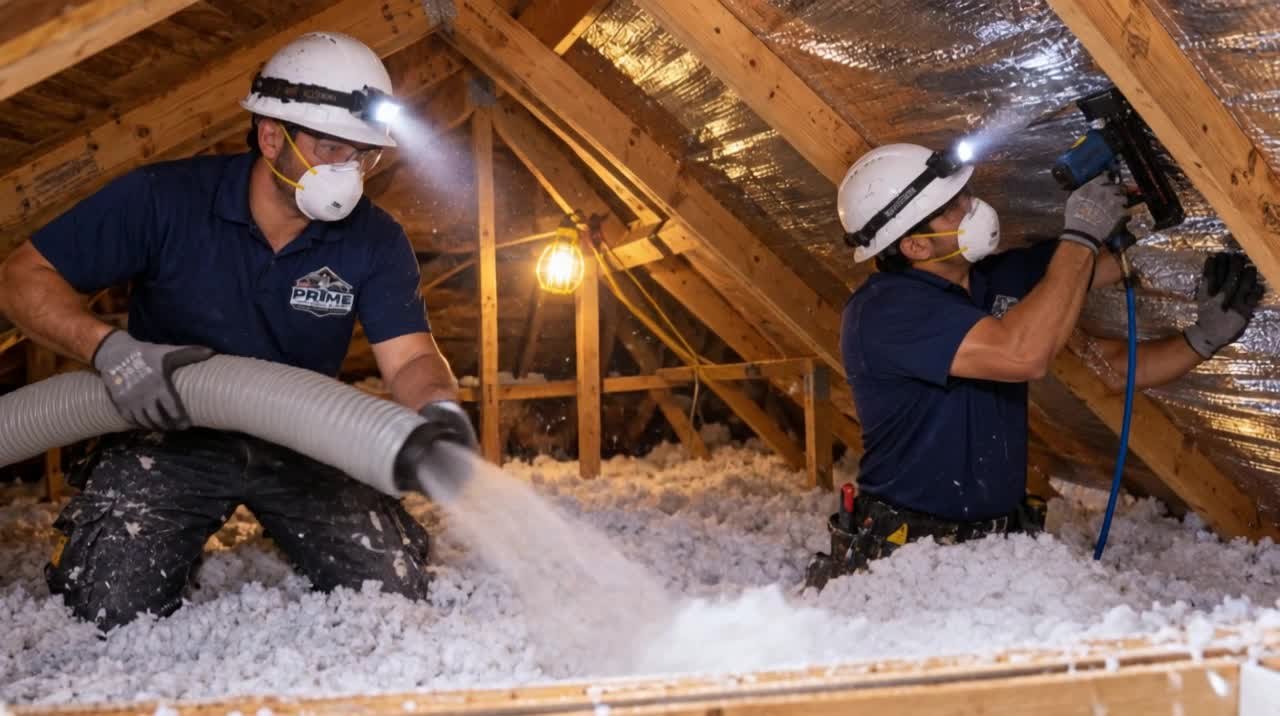
Done together, most South Florida homes see the upstairs come within a degree or two of the thermostat and the AC start cycling off in the afternoon again. It's a one-to-two-day job.
"Upstairs is hotter" is not an AC problem. It's a ceiling problem. The fix starts in the attic, and it starts with knowing what's actually up there.
Our free inspection measures insulation depth at multiple points, photographs the air leaks and duct connections, and gives you a written report with three priced options the same day. No pressure, no expiring deal. Book it here or call (561) 375-5720.

Owner, Prime Attic Solutions. 15+ years in South Florida attics. Still does every inspection himself.
One contractor says add six inches on top. Another says it all has to come out. Here's how to know who's right — from the attic hatch, with a flashlight.
6 min read · Read →Half the internet says it's the best thing you can do to a Florida attic. The other half says it's a scam that cooks your shingles. Both are wrong. Here's when it pays.
8 min read · Read →The exterminator says the rats are gone. The insulation they lived in for two years is still above your bedroom. Here's the honest answer on what has to happen next.
7 min read · Read →Free inspection. Written report the same day. Three honest prices. Open 7 days.