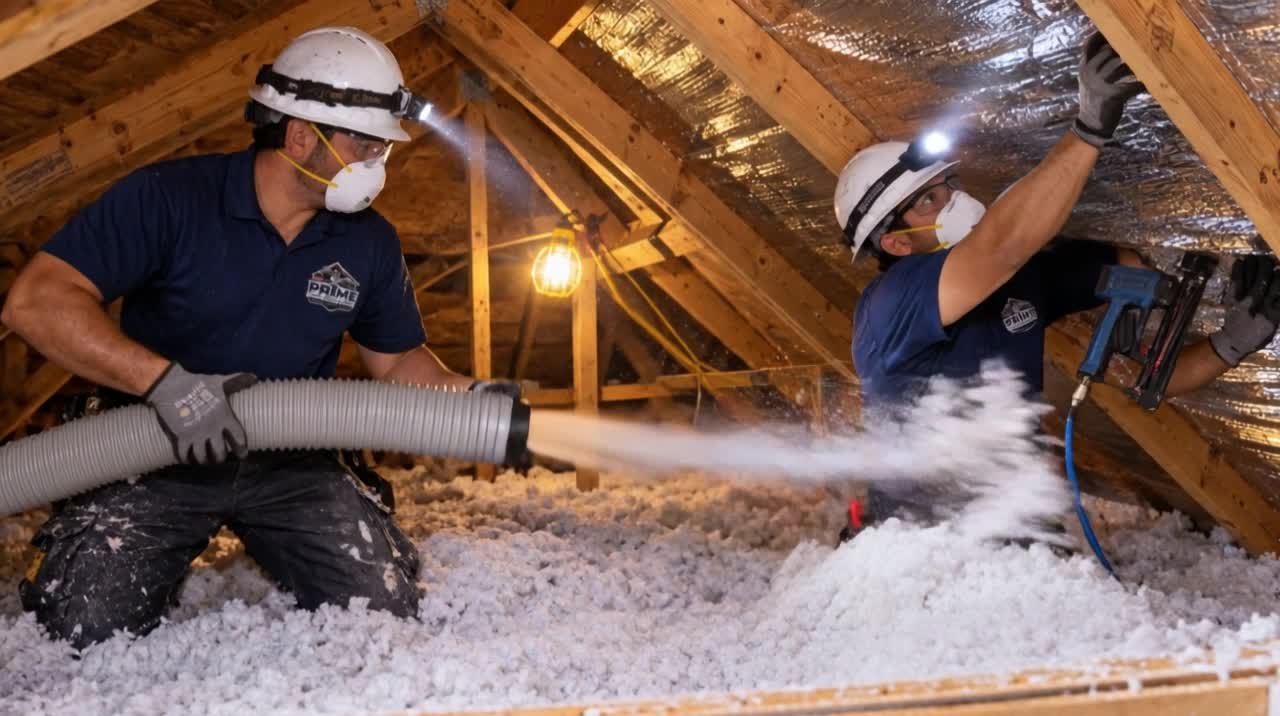
Every light fixture, plumbing stack, wire chase, duct boot and top plate is a hole between your 76°F living room and your 135°F attic. Insulation doesn't stop air. Sealing does.
Air sealing is the most under-sold job in the insulation business because you can't see the result. But it's the step that makes the insulation work. Fiberglass slows heat transfer — it does nothing about the air pouring through a 3-inch gap around a plumbing stack, and a typical South Florida ceiling has fifteen to forty of those openings.
We seal the ceiling plane before insulation goes in — the only time it can be done properly — using low-expansion foam for gaps and cracks and fire-rated sealant with sheet-metal collars where heat-producing fixtures and flues pass through.
With the attic bare or the insulation pulled back, every opening is located and photographed.
Low-expansion foam at top plates, wire and pipe penetrations, drywall seams and chases.
3M Fire Barrier CP 25WB+ with sheet-metal collars at flues, exhaust fans and heat-producing fixtures. Code requires it. Most installers skip it.
Open chases, dropped soffits and attic-side gaps around the hatch get rigid material plus sealant, not just foam.
If something can't be safely reached, you get that in writing before we start — not as an excuse after.
Photos of the sealed penetrations in your packet. Then insulation goes in over a tight ceiling.
Every product is named on your quote and your contract. We don't substitute without your written approval. See everything we install.
Air sealing is priced by the attic's square footage and the number and type of penetrations found at the inspection. It's a modest line next to insulation and removal, and it's the one with the highest return per dollar. We always quote it; you always decide.
It's the difference between insulation that performs at its rated R-value and insulation that performs at half of it. Air moving through insulation carries heat and humidity straight past it. Seal first, then insulate.
Foam is combustible. Around a water-heater flue, a furnace vent or a recessed light that produces heat, code requires a fire-rated sealant and a metal collar. Skipping it is a fire risk and an inspection failure.
Not from attic air sealing. We're closing holes between the house and a 135°F unconditioned space. Your home still breathes through designed ventilation. If you have combustion appliances, we check them.
Partially — we pull back insulation to reach penetrations. On a full removal job we can reach everything, which is one more reason removal is worth doing when the old material is poor.
Photos of every sealed penetration, before and after, in your completion packet.
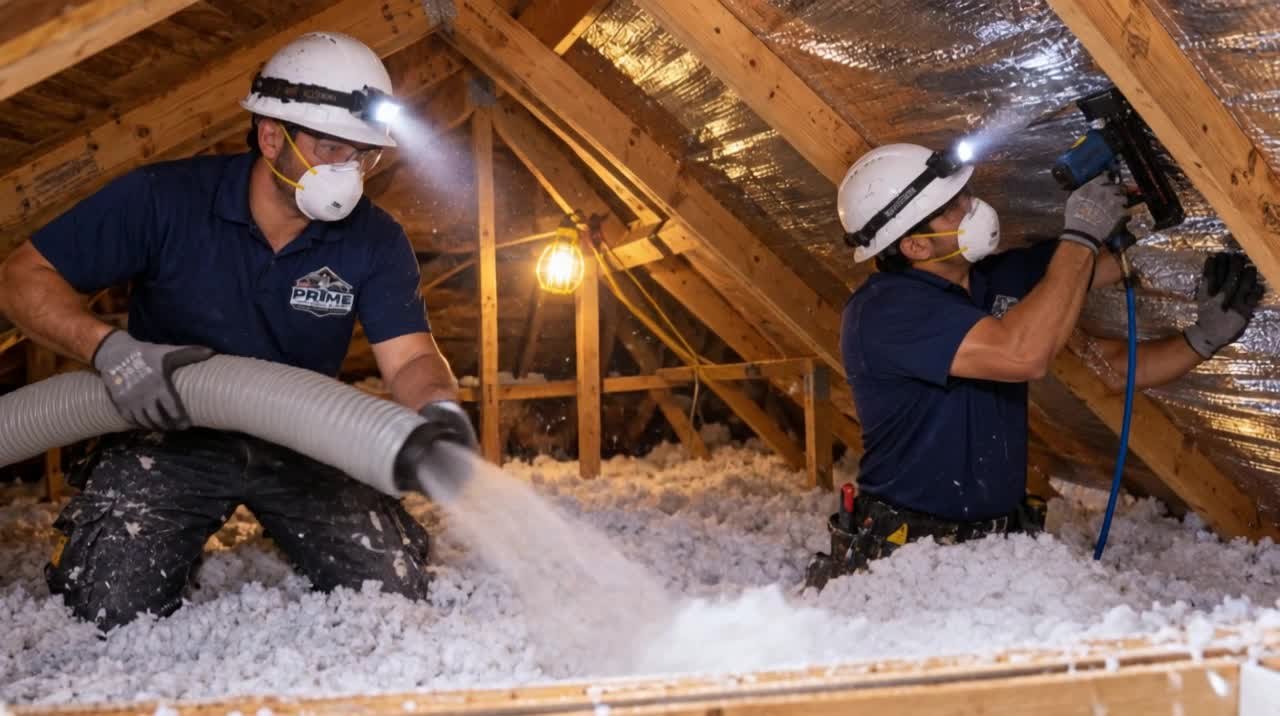
Old, wet or contaminated insulation out — HEPA-cleaned and sanitized.
Learn more →CertainTeed fiberglass to R-30 or R-38 with depth markers.
Learn more →UL 181 mastic on every joint, or new runs where ducts are done.
Learn more →Free inspection. Written report the same day. Three honest prices. Open 7 days.