The exterminator is done and the noises stopped. Now what? When rodent-contaminated attic insulation has to come out, what sanitizing actually means, and how to keep them from coming back.
Roof rats are not a sign of a dirty house. In South Florida they're a sign of a house. They come in through a quarter-inch gap at a soffit or roof return, find a 130°F attic full of soft fiberglass to nest in, and stay. By the time you hear scratching at night, they've usually been there for months.
Pest control traps them. That's the easy half. The question homeowners post afterward — "the exterminator says they're gone, do I really need to replace all the insulation?" — is the half nobody wants to answer because the answer costs money.
If they lived in it, it has to come out. Not sprayed, not "treated," not topped with fresh material. Out.
Here's why. Rodent urine and droppings don't sit on top of fiberglass — they soak through it. A rat marks constantly as it moves; a few months of activity means the full depth of the layer along every run and nest is contaminated. Sanitizer fogged over the top reaches the surface. The inside stays what it was. And the smell you notice on hot afternoons is coming from inside the layer, where no spray reaches.
There's also what you can't smell: dried droppings break down into dust, and that dust moves through your ceiling leaks and into your duct system. Hantavirus is rare in Florida; the bacteria and allergens in rodent waste are not.
You'll see attic companies advertise "attic sanitation" as a stand-alone service. Done honestly, it means this:
If a company offers to "sanitize" your attic without removing the insulation, you're paying for step 3 on top of a layer that's still contaminated. It'll smell better for a month.
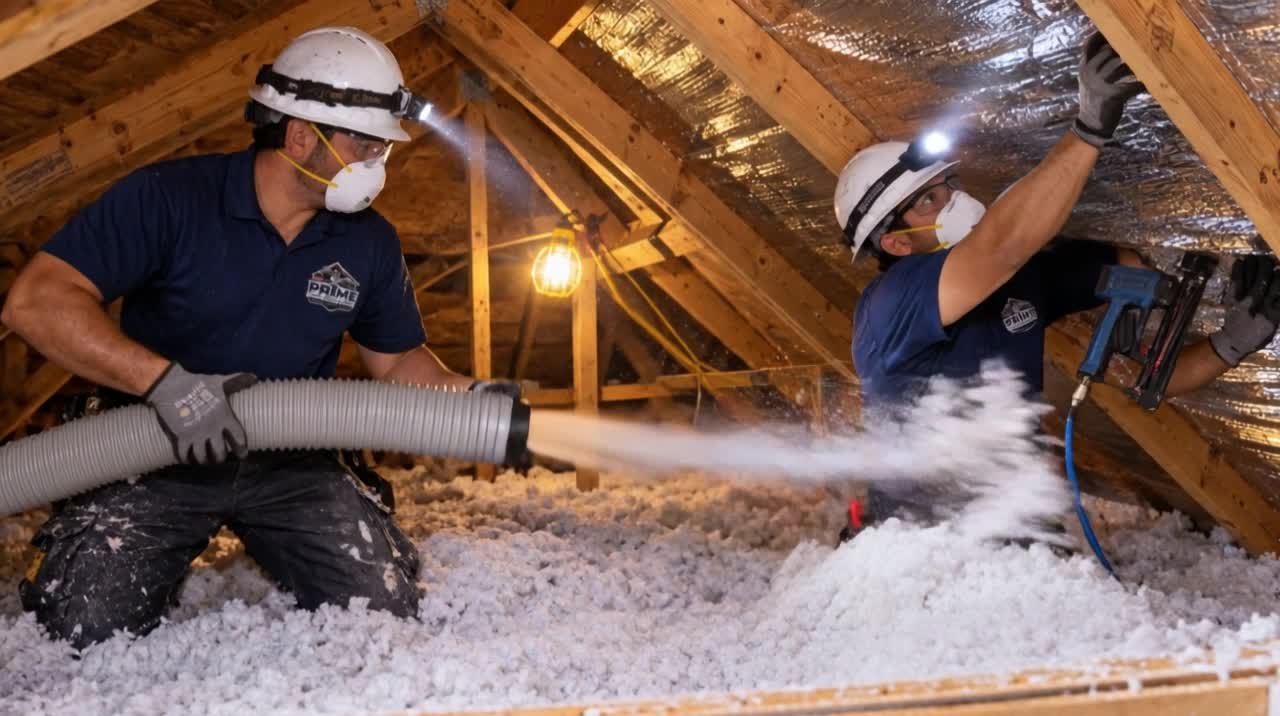
Rats chew. While the insulation is out, this is what we look for and photograph:
Trapping without exclusion is a subscription. The next generation finds the same gaps. Exclusion means every opening is closed with something a rat can't chew — hardware cloth, sheet metal and sealant. Not spray foam alone; rats go through foam in a night.
Where they get in, in rough order of frequency:
Exclusion is done from inside and outside, with the entry points listed and photographed, and it happens after your exterminator confirms the animals are gone — sealing live rats inside is a different problem.
Your exterminator. Two to three weeks until activity confirms zero.
Every entry point closed with metal. We can do this the same visit as the removal if the timing lines up.
Contaminated insulation out, surfaces cleaned, treated.
Chewed ducts replaced; wiring flagged.
Clean CertainTeed insulation to code over a sealed ceiling. The attic is better than it was before the rats.
A rodent restoration is priced on three things: the number of entry points to close, the square footage of insulation to remove, and the reinsulation. They're separate lines on the quote. Exclusion alone is a small job. The full restoration is one to two days and roughly double a simple insulation top-up — because it's two jobs: taking the old attic out and putting a new one in.
Some homeowner's insurance policies cover rodent damage to ducts and wiring but exclude the insulation. Worth a call to your agent with our photos.
The exterminator ends the infestation. The attic restoration ends the problem. Skip the second one and you'll smell the first one every July.
How our rodent proofing and restoration works. The inspection is free, Joseph photographs everything, and we'll coordinate with whichever pest company you're using. Book here or call (561) 375-5720.

Owner, Prime Attic Solutions. 15+ years in South Florida attics. Still does every inspection himself.
The thermostat says 76 and the bedroom says 84. The AC never cycles off. Here's what's actually happening above your ceiling — and the order to fix it in.
7 min read · Read →One contractor says add six inches on top. Another says it all has to come out. Here's how to know who's right — from the attic hatch, with a flashlight.
6 min read · Read →Half the internet says it's the best thing you can do to a Florida attic. The other half says it's a scam that cooks your shingles. Both are wrong. Here's when it pays.
8 min read · Read →Free inspection. Written report the same day. Three honest prices. Open 7 days.